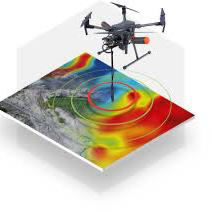
Pipeline Underground Scanning
Aeromagnetic diagnostics of pipelines using
UAVs
A Revolutionary Approach for Non-Destructive,
Magnetic anomaly detection for corrosion.
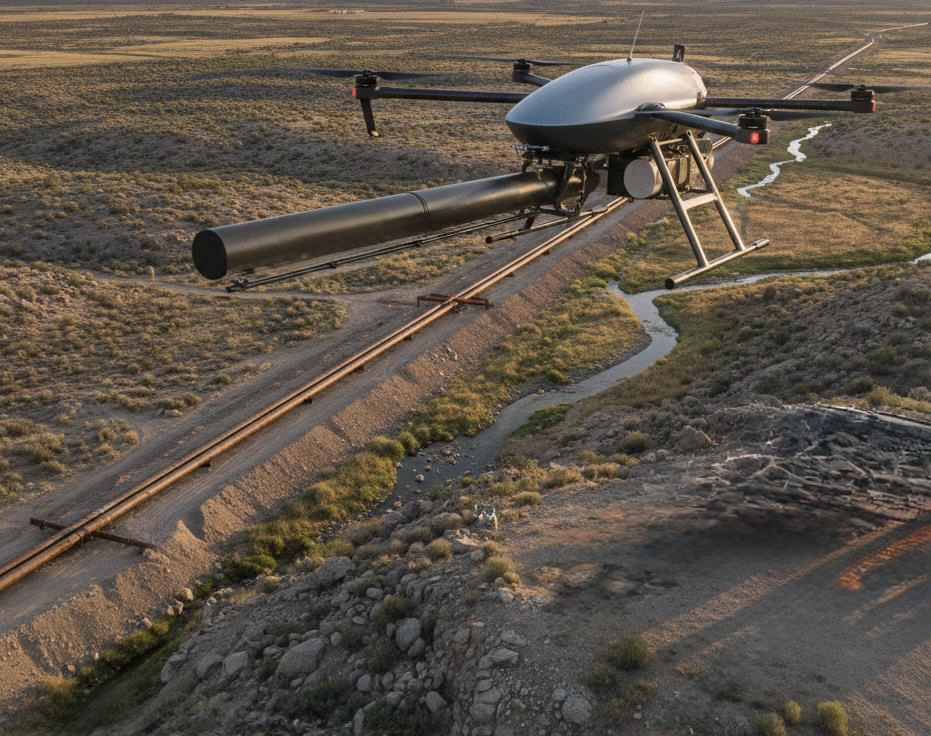
Corrosion | Leaks detection | Structural Health | Safety
——–
The Challenge: Blind Spots in Pipeline Integrity
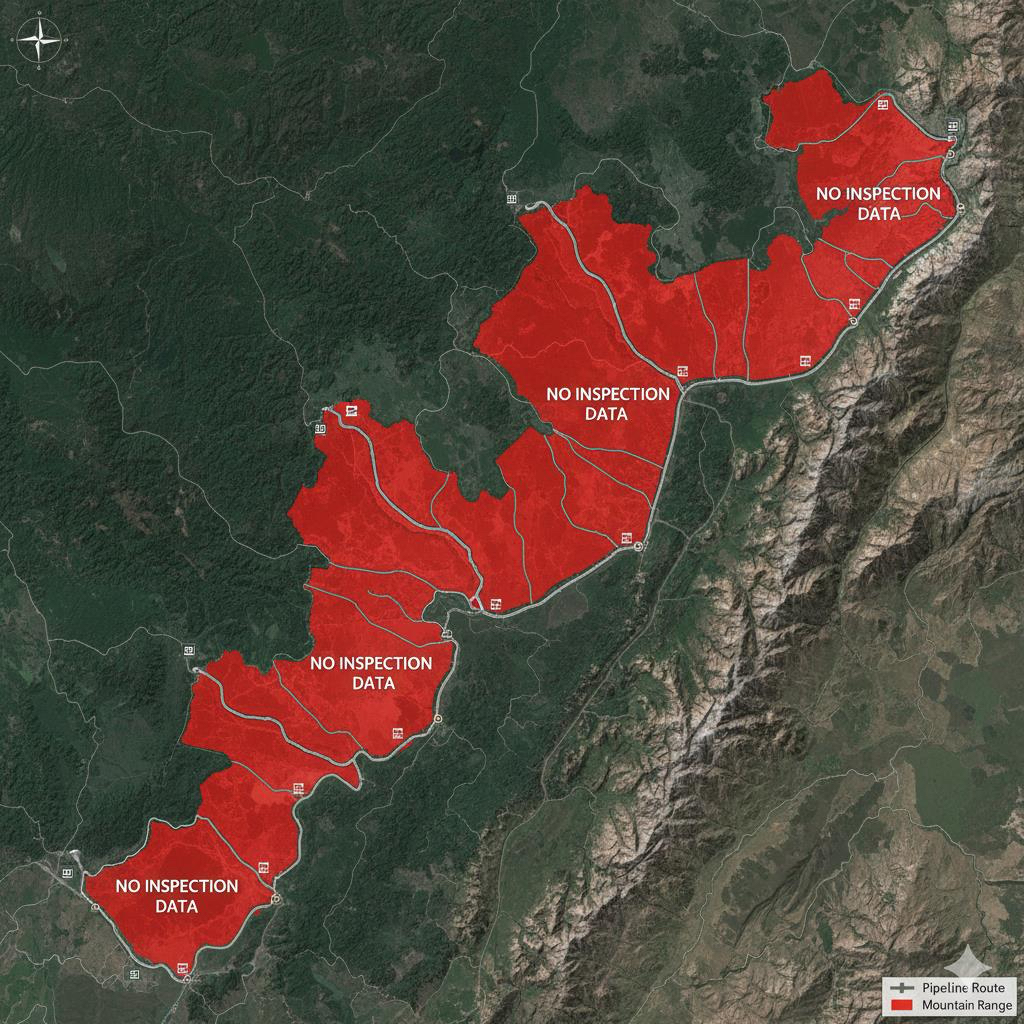
Existing NDT Methods Can’t Reach Everywhere
Current ground-based and in-line inspection tools have critical limitations.
- Hard-to-Reach Areas Create Data Gaps: Swamps, flood zones, high snow cover, dense forests, and rugged terrain remain uninspected.
- Consequence: These blind spots directly compromise safety, environmental protection, and operational reliability.
——–
Our Solution: The RAVAM UAV-Based System
Comprehensive Coverage from the Sky
- RAVAM Technology: Unmanned Aerial Vehicle (UAV) platform equipped with high-sensitivity magnetometers.
- Core Principle: Measures the magnetic field above the pipeline to assess its technical condition without contact or excavation.
- Key Advantage: Enables safe, efficient, and regular inspection of entire pipeline routes, regardless of surface terrain.
——–
Objectives & Deliverables
From Data to Actionable Intelligence
- Precise Mapping: Determine exact pipeline position and depth.
- Segment Identification: Define individual pipe segments and joints.
- Baseline & Monitoring: Establish a magnetic “fingerprint” at installation and track changes over time – recommended every 6 months.
- Defect Detection: Identify areas with magnetic anomalies indicative of corrosion, metal loss, cracks, or leaks.


Precise Positioning
Determine exact pipeline coordinates and burial depth with sub-meter accuracy using integrated GPS and IMU data.

Segment Identification
Distinguish individual pipe segments, joints, and welds to create a digital twin of the pipeline infrastructure.

Baseline & Monitoring
Establish a magnetic “fingerprint” at installation. Schedule recurring inspections (recommended every 6 months) to track wall thickness changes over time.

Defect Detection
Identify magnetic anomalies indicative of corrosion, metal loss, cracks, or leaks using high-resolution MFL sensors.
——–
Field Equipment Suite
Precision Technology for Precise Measurements
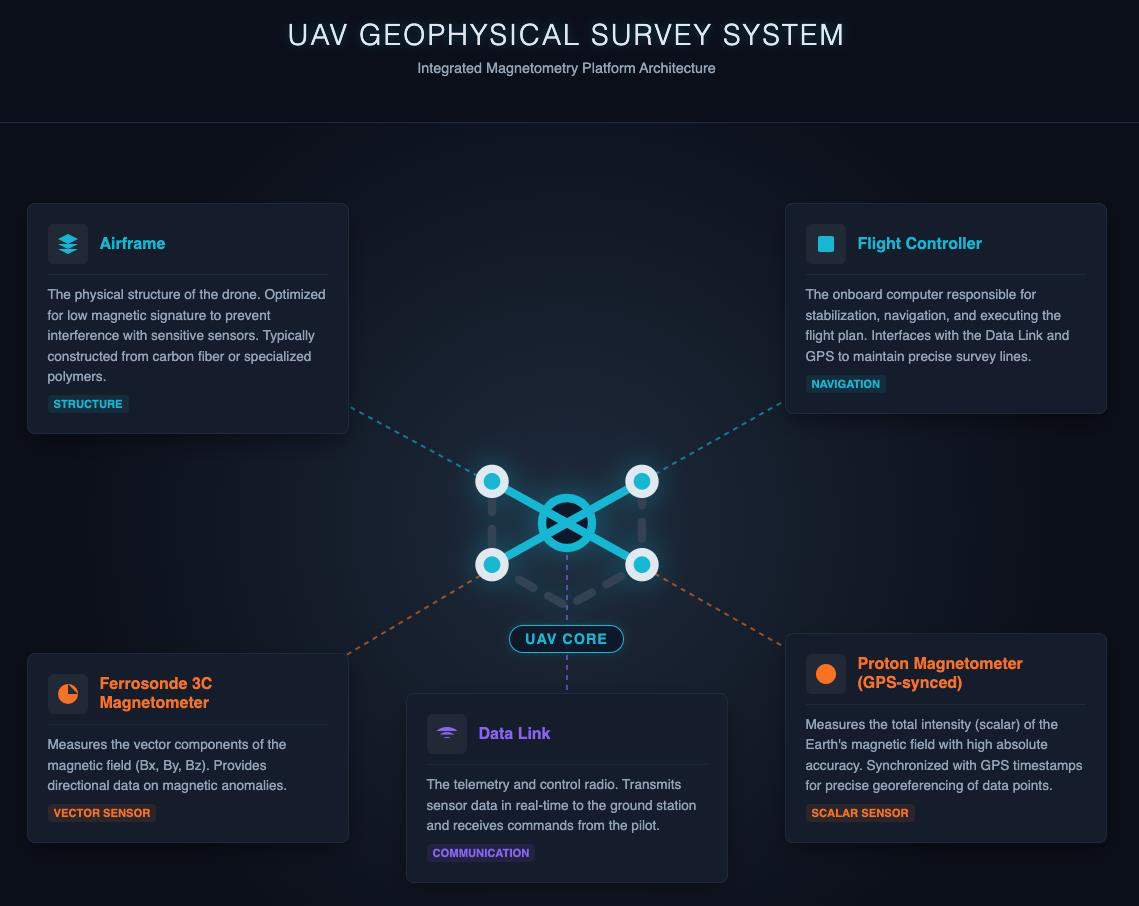
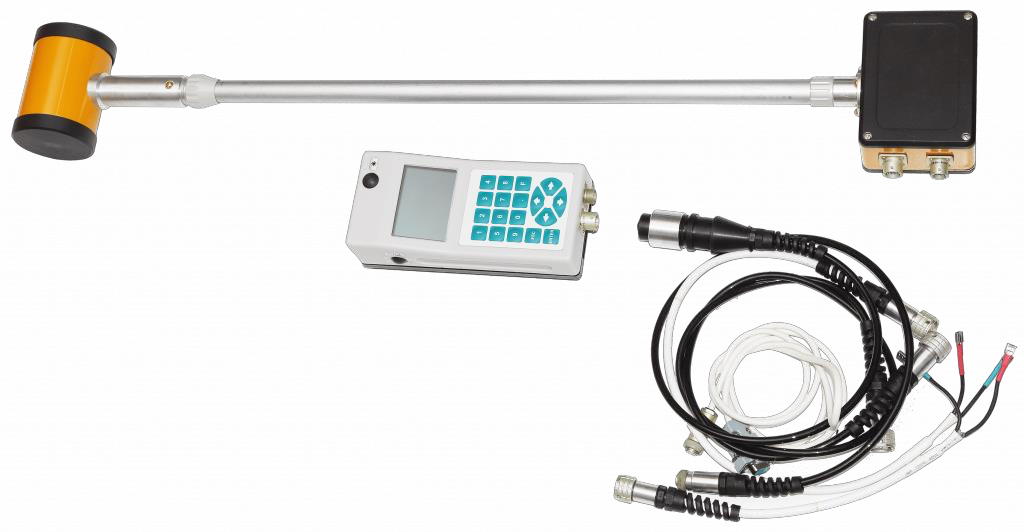
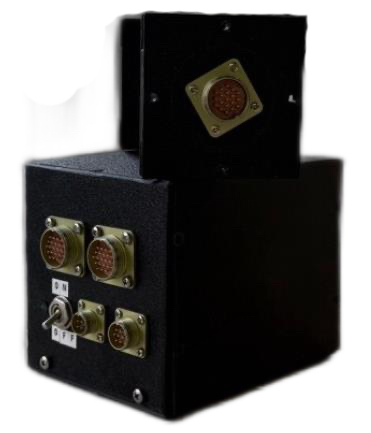
- Ferrosonde three-component magnetometer
- Resolution vector magnetometer. Sensitive to subtle changes in magnetic field direction and strength. Primary tool for defect detection.
- Proton Precession Magnetometer
- Provides absolute scalar magnetic field (F) measurements. Used for calibration and referencing against Earth’s geomagnetic field.
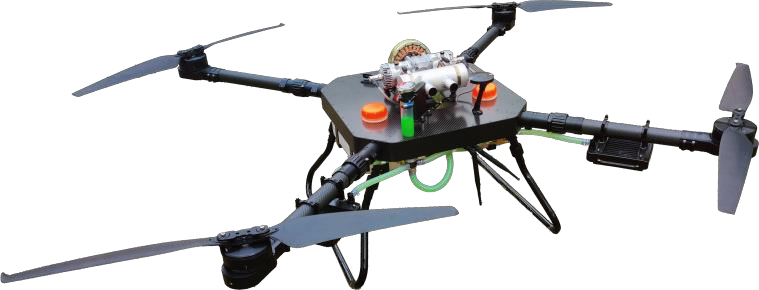
- Heavy-lift UAV
- Robust platform for sensor payload. Enables low-altitude, precise flight paths for high-density data collection.
——–
Technology Proof
Field Test Results: Sensitivity to Pipeline Features
Detecting the Signature of Welds and Joints
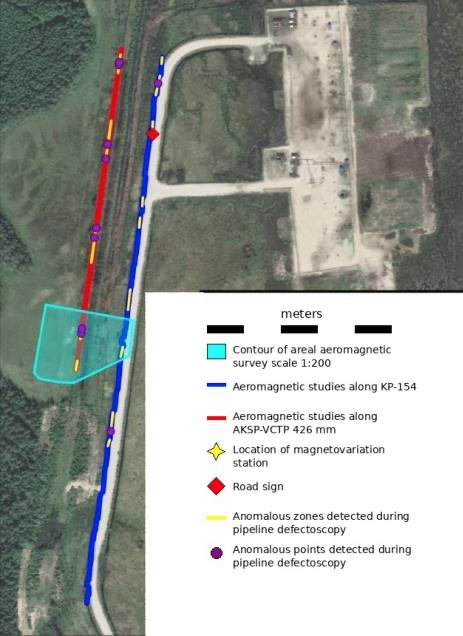
Actual results from a recent field experiment: Controlled test to measure magnetic response of pipeline features
- Finding 1 – Pipe Joints: Ferrosonde magnetometer clearly detects joints between segments with high-amplitude anomalies (up to 7000 nT).
- Finding 2 – Welding Seams: Welds are also distinctly identifiable, with lower amplitude (~3000 nT). Anomaly amplitude decreases after welding.
- Conclusion: The system is exquisitely sensitive to the intrinsic magnetic “footprint” of the pipeline structure.
Pipeline Underground Scanning
Field Test Data Interpretation:
Before vs. After Defect Introduction
General characteristics of the field
Z & F Components: On the vertical component and on the full induction vector, the tube appears to be a single magnetic dipole having positive and negative poles. A similar pattern is observed on the graph of the field after the defects are applied. The extremes become less intense.
X & Y Components: Welding joints are highlighted on the graph. After the defects were applied, the field became less amplitude, and the extremes of the anomalies shifted. Each segment of the pipe individually represents magnetic dipoles, which, during welding, manifest themselves as a cumulative effect shown in the graph.
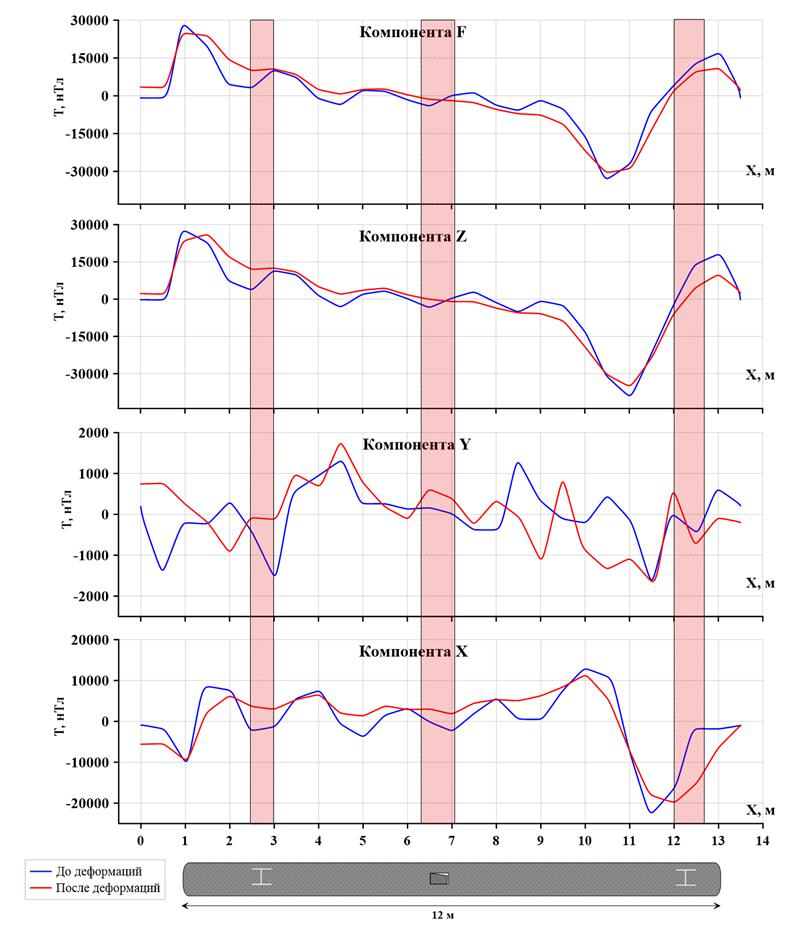
| Component | Test #1 | Test #2 | Test #3 |
|---|---|---|---|
| X | Before: Local minimum, the effects of the joints After: Increasing the field values by 6000 nT, smoothing the local minimum | Before: Local minimum, the effects of the joints After: Increase in field values by 4000 nT, smoothing out the local minimum | Before: Local minimum, the effects of the joints After: Displacement of the extremum towards the defect, a change in its amplitude by 4000 nT |
| Y | Before: Local minimum, the effects of the joints After: Increase in field values by 1500 nT, smoothing out the local minimum | Before: Absence of local anomalies After: The defect boundaries are manifested by local minima, with an increase of 500 nT | Before: Local minimum, the effects of the joints After: Displacement of extremes, an increase in their amplitude by 1000 nT |
| Z | Before: The effects of the joint seams After: Increase of field values by 8000 nT, smoothing of local minima | Before: The effects of the joint seams After: Smoothing out the local minimum, the effect of the butt joint does not appear | Before: The effects of the joint seams After: Shifting the extremum towards the defect, smoothing out the effects of the joints |
| F | Before: The effects of the joint seams After: Increase in field values by 7000 nT, smoothing out local minima | Before: The effects of the joint seams After: Smoothing out the local minimum, the effect of the butt joint does not appear | Before: The effects of the joint seams After: Shifting the extremum towards the defect, smoothing out the effects of the joints |
——–
Benefits & Applications
Proactive Integrity Management
General characteristics of the field
- Safety: Early identification of potentially hazardous areas.
- Efficiency: Survey up to 50 km per day, dramatically faster than ground crews.
- Cost-Effective: Reduces need for expensive and disruptive excavations or downtime.
- Comprehensive: Provides data for 100% of the route length.
- Preventive: Enables a shift from reactive repair to predictive maintenance.
RAVAM Monitoring Service
Establish a semi-annual monitoring program to build a time-series database of pipeline health, enabling true predictive analytics.
UAV-based aeromagnetic diagnostics fill a critical gap in pipeline integrity programs. The RAVAM system provides a sensitive, non-contact method to detect defects, monitor changes, and ensure safety.